
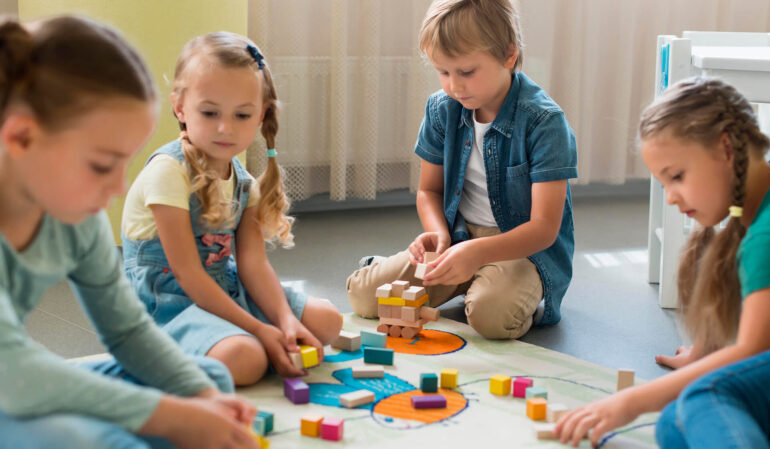
Research on integrating Waldorf and Reggio Emilia approaches demonstrates that blending these models enhances early childhood development holistically, supporting social, emotional, intellectual, physical, and creative growth. This infusion fosters independent thinking, creativity, and emotional intelligence.
1. Emotional Development and Social Competence
Waldorf: Creates a secure, nurturing environment emphasizing rhythm, routine, and emotional warmth. Children learn emotional regulation, empathy, and social skills such as conflict resolution and cooperation.
Reggio Emilia: Emphasizes relationships between children and their environment, encouraging emotional expression through art, drama, and play. Children develop self-awareness, empathy, and social problem-solving skills.
2. Cognitive and Intellectual Development
Waldorf: Experiential learning and storytelling connect ideas with imagination, promoting creative thinking and problem-solving beyond rote learning.
Reggio Emilia: Inquiry-based learning fosters curiosity and reasoning. Children engage in symbolic thinking, laying foundations for literacy, numeracy, and critical thinking.
3. Creativity and Expressive Arts
Waldorf: Artistic expression through painting, music, drama, and crafting supports imagination, problem-solving, and innovation.
Reggio Emilia: The “hundred languages” approach encourages expression across multiple mediums, enhancing fine motor skills, visual-spatial reasoning, and emotional expression.
4. Child-Centered Learning and Autonomy
Both approaches prioritize child agency: Waldorf aligns learning with children’s internal rhythms, fostering independence. Reggio Emilia’s emergent curriculum allows children to pursue long-term projects based on interests, building self-confidence and engagement.
5. Holistic Development and Long-Term Success
Waldorf: Integrates head, heart, and hands to balance intellectual, emotional, and physical growth.
Reggio Emilia: Promotes hands-on, play-based learning.
Research shows children in these programs demonstrate academic success, personal responsibility, social-emotional maturity, and collaborative skills.
6. Nature and Outdoor Learning
Both models integrate outdoor exploration: Enhances physical health, social development, executive functioning, and resilience.
Encourages appreciation for nature and hands-on, interactive learning experiences. By combining Waldorf’s rhythm, creativity, and emotional development with Reggio Emilia’s inquiry, collaboration, and artistic expression, children benefit from a holistic, immersive educational experience: Deep social-emotional growth, Freedom to explore curiosity and creativity, Development of critical thinking, problem-solving, and collaborative skills, Encouragement of independence and ownership of learning, Academic readiness naturally integrated into play and exploration.
This is is why SPICE’d Preschool Academy’s commitment is to nurture the whole child; laying the foundation for lifelong success.